Where Did Biryani Come From? The History of Biryani
Where did biryani come from? Biryani's name traces back to Persian, and most food historians link the dish to Persian rice cooking that came to the Indian subcontinent and was refined in Mughal-era royal kitchens between the 1500s and 1700s. From there it spread across India, and every region made it its own.
At a glance
- Name: likely from the Persian birian ("fried before cooking") or birinj (rice)
- Roots: Persian rice dishes, brought to India through traders, travelers and the Mughal courts
- Refined in: Mughal-era and princely kitchens across North and South India
- Signature technique: dum, slow-cooking rice and meat in a sealed pot
- Famous styles: Hyderabadi, Lucknowi (Awadhi), Kolkata, Malabar, Sindhi and more
Biryani might be the most debated dish in Indian food. Ask five people where the best biryani comes from and you'll get five passionate answers. Here's the story behind one of the world's great rice dishes, and how we make ours at Channi's Kitchen.
A Persian name
The word biryani is widely believed to come from Persian. One theory points to birian, meaning "fried before cooking", which describes rice that is toasted in fat before it's simmered. Another points to birinj, the Persian word for rice. Either way, the name tells us biryani shares a family tree with the pilafs and polos of Persia and Central Asia (Wikipedia).
Refined in royal kitchens
Persian-style rice dishes reached the Indian subcontinent through trade routes, travelers and the rulers of the Mughal Empire, which began in the 1500s. In the kitchens of Mughal courts and later regional nawabs and nizams, cooks combined Persian technique with Indian spices: saffron, cardamom, cinnamon, cloves, mace and more. The result was a dish fit for royalty.
Many of these kitchens perfected dum pukht, cooking rice and meat together in a heavy pot sealed with dough, so everything steams in its own aromas. Who first perfected dum is still debated, but the technique remains the soul of many great biryanis today.
One dish, many styles
As biryani traveled, every region gave it a local accent:
- Hyderabadi biryani: associated with the Nizams of Hyderabad. It's famous for the kacchi method, where raw marinated meat and partly cooked rice are layered and slow-cooked together under dum.
- Lucknowi (Awadhi) biryani: from the courts of Awadh. It's gentler and more fragrant, made in the pakki style, with meat and rice cooked separately before they're layered.
- Kolkata biryani: linked to Nawab Wajid Ali Shah of Awadh, who settled in Kolkata after the British deposed him in 1856. It's known for a soft potato (and often an egg) tucked into the rice. Why the potato? Theories range from economy to culinary experiment, and historians still debate it (Wikipedia).
- Malabar (Thalassery) biryani: from Kerala's coast, made with short-grain rice and rich with fried onions and spices, shaped by centuries of Arab trade.
- Sindhi biryani: from Sindh, now in Pakistan. It's bolder and spicier, often with potatoes, plums and green chilies.
Biryani vs. pulao: what's the difference?
Both are spiced rice dishes, but biryani is usually layered, with rice and a separately spiced meat or vegetable mixture cooked together at the end, often under dum. Pulao (pilaf) is typically simpler, with everything cooked together in one pot from the start, so it's milder and more uniform.
How Channi makes hers
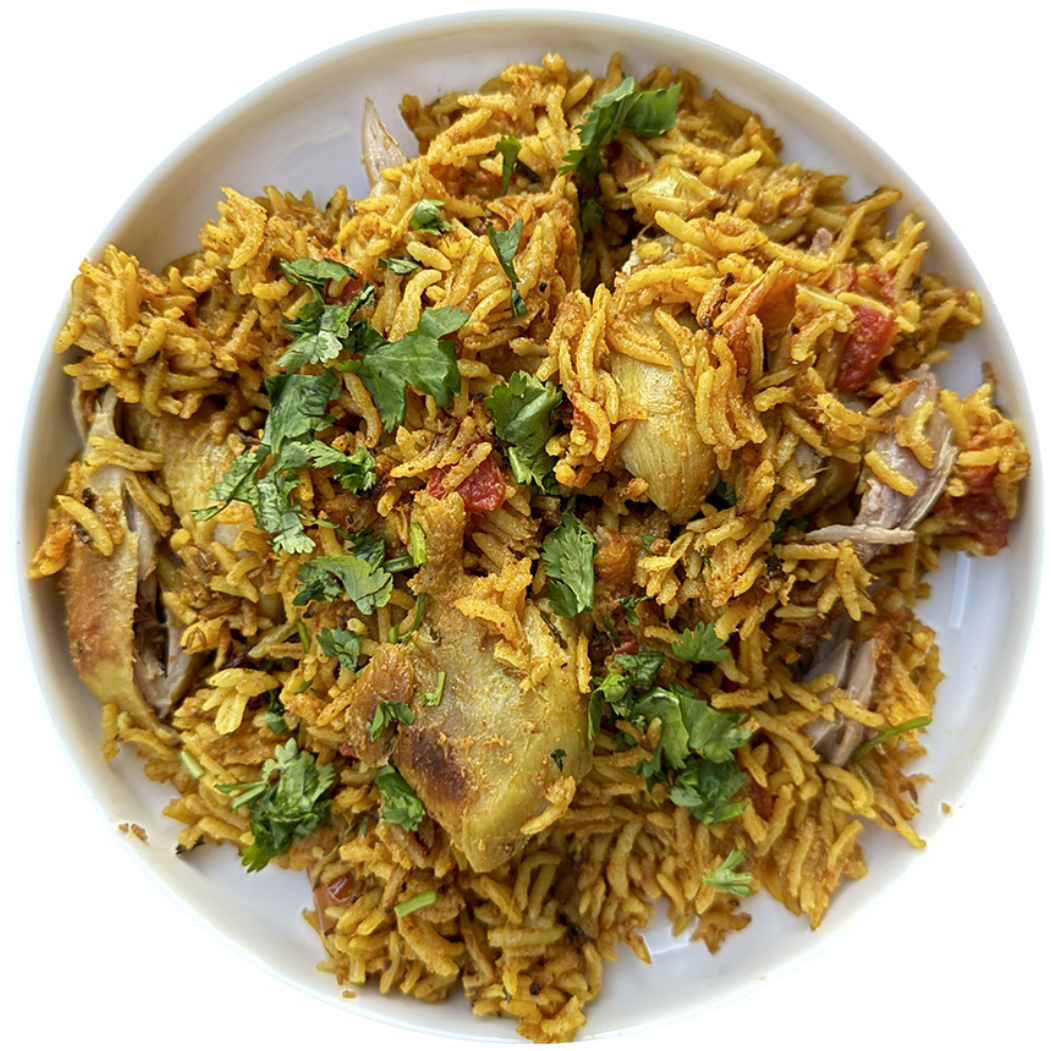
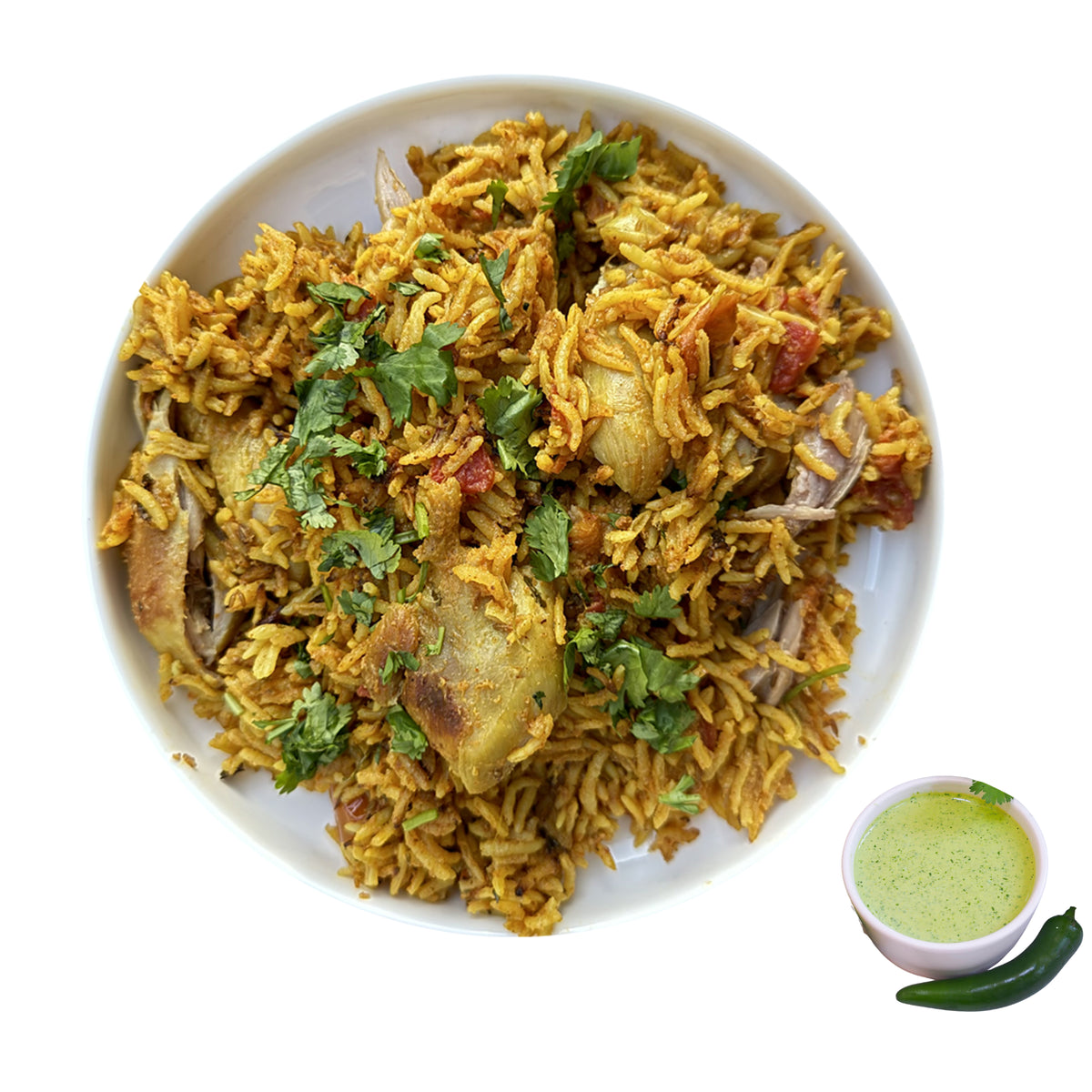
Every region put its own stamp on biryani, and so did Channi. Our Chicken Biryani layers fragrant basmati rice with seasoned chicken and warm spices, then finishes it with Channi's signature Peruvian twist. It's mild, gluten-free and nut-free, and made with no added sugar and no seed oils. It's a complete meal in one container, and you can add it to any box in our meal builder.
That's how Channi cooks: she tastes a flavor she loves, and her heart tells her how to give it an Indian twist.
Frequently asked questions
Where did biryani originate?
Biryani's name and roots trace to Persian rice cooking. The dish as we know it was developed on the Indian subcontinent, especially in Mughal-era royal kitchens, and then spread across South Asia.
Who invented biryani?
No single person. Biryani evolved over centuries as Persian rice traditions met Indian spices and techniques in royal and regional kitchens.
What does "biryani" mean?
It likely comes from the Persian birian ("fried before cooking") or birinj (rice).
What is the difference between Hyderabadi and Lucknowi biryani?
Hyderabadi biryani is often made the kacchi way, with raw marinated meat slow-cooked with rice. Lucknowi biryani uses the pakki method, with meat and rice cooked separately before layering, for a lighter, more fragrant result.
Why does Kolkata biryani have potatoes?
It's linked to Nawab Wajid Ali Shah's kitchens after he moved to Kolkata in 1856. Historians still debate whether potatoes were added for economy or as a culinary experiment.
What's the difference between biryani and pulao?
Biryani is layered and often slow-cooked under dum. Pulao is cooked together in one pot from the start and is usually milder.
Taste a biryani with a twist
Build your box → with Channi's Chicken Biryani. Free delivery on every box across Los Angeles and Orange County. Like food history? Read where chicken tikka masala was invented.